Tuesday, February 24, 2009

Working with civil society in Syria

I came to Syria one year ago to work as programme officer with UNDP in Damascus. My area of expertise lie within civil society and gender. Before arriving in Syria I was working with civil society in Nepal where the playing field is very different from here. After 12 years of civil war in Nepal the government is often non-existing outside of the major cities and civil society is filling the gaps both in terms of charity, development and advocacy. Coming to Syria the picture is quite different. At first glance it is difficult to recognise the civil society and the organisations involved within this field. However, it is there and it is very active. The Syrian civil society is characterised by being very diverse and nuanced - both in terms of geography, working areas, professionalism and community ties.

Syria has a long and proud tradition of charity based work. The country has a large number of charity organisations working with different marginalised groups in the country. Within the last 6-7 years a new trend has been noticeable. A new type of organisations are being established, namely development oriented organisations or as we know them, NGOs. These organisations focus more on long-term impacts and empowerment of people. In other words, where as the charities would give women and men a fish to eat, the NGOs are giving people a fishing pole and teaching them how to fish. Finally, there is also a growing number of advocacy NGOs mostly within the environmental area i.e organisations focusing on the rights of the people fishing.

As mentioned these new organisations have been growing steadily in number and size for the past 6-7 year. This is a very positive trend and UNDP is dedicated to support this process and these organisations. For this reason UNDP has been working with the Syrian Trust for Development, a newly established NGO in the country to develop the framework for a platform for NGOs in the country. It has been a long and hard process and we are still only at the beginning of the journey. The idea is to provide the civil society with a place to come together to network, discuss development issues and learn from each other. It is extremely important that the platform is driven by the member, that is serves their needs and that they see an added value in participating in this work. We have therefore been working hard throughout the last year talking to the organisations in the country to make sure that it is their needs that are reflected in the design of the platform.
In December we had a large national dialogue workshop with 30+ organisations participating. After an introduction of our work and surveys conducted on civil society in Syria the participants broke into working groups to discuss what they needed from a platform catering to NGOs. The outcome has now been formulated into a 3-year project we are hoping to initiate in the spring.

During these 3 years we will be setting up the actual platform including membership criteria, organisational structures and applying for legal registration with the government. Additionally, the platform will be offering several services identified by the members themselves. First and foremost, we will concentrate on establishing networks for the organisations to participate in. A network can be focusing on specific developmental issues such as women’s rights, environment, etc. This all depends on the interest of the members. The NGOs can then come together to discuss how to address these issues and learn from each other. Civil society in Syria is very scattered and diverse. Often they are not aware of the work or even existence of other organisations working within the same field or in similar areas. During our many meetings with organisations last year including the national dialogue this came out very clearly and already several ties between organisations have been established in informal ways. Establishing networks for the NGOs to get together will be very beneficial to the members of the platform.
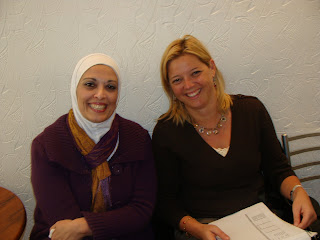
Finally, the platform will work with developing the capacities of the organisations. As with many newly established organisations the NGOs in Syria is often characterised by a few persons getting together with a interest in making a difference in their community. The will and interest is there but often there is a lack of capacities to do the actual project management, to report back to donors and to apply for the funds. The platform is hoping to be able to address this issue through capacity building activities and the establishment of a grant clinic.

All in all, it is a very exciting project. The past year has been very interesting in terms of having the possibility to work with these organisations and learn more about the situation of the organisations and the challenges they face as well as the opportunities that are present now. It has been hard work to develop this new 3-year project and we have often had to change certain things based on the input we received from the organisations. Based on this process however we are certain that the project developed is based directly on the needs and wishes of the future members of the platform.

As mentioned this is only the first step on a long road. It is well known that in Syria nothing happens overnight and just like Rome was not build in one day neither will this platform be. The next 3 years will be interested and exciting. I have one year left in the country and will not be able to follow the project all the way. However, this is the life of a development worker and hopefully the platform website will be up and running within this year and I will be able to follow the process online from wherever my next job will take me.

Friday, November 14, 2008

Visits from back home

One of the great advantages of living in Syria is that I now live closer to Denmark than ever before. This also means that more people come down for a visit.
October was a particulary busy month. First two guests were my cousin, Martin, and his friend. They stayed with me for a couple of days, together we went to Palmyra for one of the biggest events of the year: The Camel Race

The two travellers then ventured off to see not only Syria but also parts of Jordan - in two weeks they covered almost as much ground as I have in a year....

Following this my parents came to visit. As always it is great to have them visiting and a great part of their time here was spent on eating, drinking and talking. Still, we managed to find time to travel around the country, see some of Syrias amazing sights, shoppe and dress up!!!

Now I am looking forward to 2009 and even more visits from around the globe - great!


Wednesday, October 8, 2008

Sorry this is too crazy - but not unexpected unfortunately

In gender-sensitive Iran, a car designed specially for women

Robert Tait and Noushin Hoseiny
The Guardian,
Tuesday October 7 2008
Article history

Iran's biggest motor manufacturer is to take the country's gender sensitivity to new levels by producing a car specially for women.
It will be fitted with features common on the international market but seen as female-specific in Iran's male-dominated culture. These include an automatic gearbox, electronic parking aids, a navigation system and a jack designed to make it easier to change a wheel, suggesting that women drivers lack the mechanical competence of their male counterparts. Alarms may also be installed to warn of flat tyres. The vehicle will be painted in soft "feminine" colours and include interior designs tailored to women's tastes. There will also be audiovisual entertainment systems for child passengers.
Iran Khodro, the state-backed manufacturer, said it would put the first models on sale next June to coincide with Iranian women's day. The car will be part of the Samand range, which has been exported to allied countries such as Syria and Venezuela. However, the women's car will initially be aimed solely at the Iranian domestic market.
Vahid Najafi, managing director of Iran Khodro's order unit, said the design was prompted by a sharp increase in women drivers and car owners and was based on research into their preferences and needs. Cars will be built in response to orders from customers.
"Women's necessities are different from men's," Najafi said. "For example, a woman goes shopping, takes children to school - so this car is going to have some visual distinctions that will separate it from other cars. It will be more beautiful. Cheerful and attractive colours will be used - for example red. A series of decoration pieces will be added to the interior, on the dashboard for example. What's important for women is that the car should be comfortable and handle well."
The idea is in line with gender separation officially encouraged by Iran's Islamic authorities. Last year they backed a proposal for a female bicycle designed to conceal the rider's legs and upper body. Women are discouraged from cycling, mainly to preserve notions of female modesty, and are banned from riding motorcycles, except as passengers.
A women-only taxi service, with women drivers, was recently launched in Tehran and other big cities. Men and women are segregated in buses and on Tehran's underground.
Iran Khodro last year announced plans for an Islamic car - with a navigation system designed to locate Mecca - to be produced jointly with Malaysia and Turkey.

Sunday, September 21, 2008

Ramadan in Syria

September 1st 30 days of Ramadan started for all Muslims around the world and Syria was no exception. In my office the change was felt immediately; working hours were cut by one hour pr day and despite that people still showed up half an hour late – “it’s Ramadan!”

The water cooler (and heater) was emptied and turned off so I have to bring my own bottle of water with me to the office and can forget everything about a cup of coffee during the day. Luckily, the Syrians are very relaxed with non-Muslims not fasting and my colleagues have given me permission to drink and eat at the office. Same understanding does not exist with Muslims not respecting the Ramadan. A friend of mine was scold for drinking a beer – by the waiter that served him the beer!!!

The first two weeks are supposedly the worst – close to 15 hours without food or water in 40 degrees just can’t be too much fun! I have witnessed a lot of road rage and have been yelled at by cashiers and taxi drivers. Basically, people have more of a temper – understandably.

My Arab teacher has suffered a great deal from lack of food and as a consequence my vocabulary has been filled with food related words, which I guess is very useful.

As the clock approaches 7 pm the city changes dramatically. The streets are abandoned and the few cars left on the road are driving as fast as possible to their homes and the great Iftar – at sunset it is time to break the fast and finally eat. At restaurants great iftar menus are the only thing on offer with lots and lots of Arabian food. And though I love the local food I have to admit that after a few Iftars it is nice with a few friends how are willing to break the fast with lots and lots of sushi instead!

Tuesday, July 1, 2008

Mini break in Egypt

Finally, finally did I manage to take a few days of from UN and Damascus – and it was much needed!

My good friend, Bodil, and her husband, Sigge, have been living in Cairo for the last three years. Since they are now leaving it was last chance to visit.

Though Cairo is a big and interesting city where we easily could have spent 5 days the three travelers, Sophie, Steve and I, agreed that a few days by the Red Sea was a must.


So first part of the break was spent on the beach and in the sea including an amazing trip with snorkel. Following this we went to Cairo to spend a day at the Giza Pyramids and a lovely evening on the Nile. Bodil and Sigge had prepared a wonderful picnic that we had on a small Nile boat while the sun went down – a dinner I will late forget!

Thursday, June 5, 2008

A trip to the desert


The vast majority of Syria is desert and after 4 months in the country it was time to go out and look at it! 3 hours from Damascus is Palmyra, an oasis in the middle of the desert interesting not only for the bare landscape but also for the incredible beautiful ruins situated just outside the town.

We spend a full day in the burning sun by these ruins. Despite the impressive attractions there were very few tourists and we enjoyed walking around taking in the ruins and the desert by ourselves. Once in a while we were “interrupted” by a guy on a moped who had spotted us and came out to try and sell us a soda or homemade necklace.

In Palmyra we were lucky enough to made a new friend. Muhammed is a real Beduin disguised as a business man – or was it the other way around? He has 60 camels and runs camel trips into the desert for the tourists. One of his camels, Casanova, came in second at the yearly camel race – an event I will make sure to witness. I was fortunate enough to get a few moments on Casanova and there is little doubt that he is a winner!


Wednesday, May 28, 2008

New York New York


As part of my introduction to UNDP I get to go to New York for a three week course at the Headquarters. I will not bore you with details from the course that was from morning till evening about UN, fortunately, there were lots of interesting participants who lived and worked in many different and exciting places in the world. Despite the many different nationalities and language we had one big thing in common: we all worked as programme officers with the UN. During the three weeks we had lots of good discussion and many interesting examples from the work of UN in as different places as Cuba, Bhutan, Burkina Faso, Cape Verde, Maldives – the list goes on….


Though the majority of my time in New York was spent in the course or in meetings, there was still some time to shop, enjoy the good restaurant and vibrating night life. Weekends were spent at Yankee Stadium, Brooklyn Heights, Coney Island – and naturally on the cafés of Manhattan.